Category Archives: Agritourism, Chianti farmhouse holidays

Chianti: A new and more tenable theory for the origin of the name
http://laportadivertineusa.com/2015/04/09/origin-chianti-name/
APRIL 9, 2015
Above: The view from Panzano in Chianti.I’ve spent the better part of my day reading up on all the literature devoted to the origins of the place name Chianti.
Chianti is what is known in toponomastics (the study of place names) as a choronym (Greek for chorus name), in other words, a place name that refers to a number of different places in the same general area.
In the early twentieth century, two theories as to its origins emerged.
On the one hand, scholars have speculated that it came from the Etruscan clante or clanti (the Etruscans were the ancient people who inhabited Italy before the rise of the Roman Empire).
It means step son, god son, or adoptive son in Etruscan. In turn, it comes from the Etruscan clan which means son.
The other theory, which few take seriously, is that it comes from the Latin clango, meaning to clang. The idea would be that Chianti got its name from the sound of cowbells worn by the ubiquitous livestock there — a thesis nearly impossible to support and easily discredited.
But after enough digging around the internets, I found the site of Massimo Pittau, one of the world’s foremost authorities on Etruscan language and the history of the Italian language.
He has proposed that Chianti comes from the Etruscan Ciante, which was pronounced kee-ahn-teh in the ancient language.
Although no one knows its original meaning, it is a well-documented aristocratic family name that can be found in at least two major inscriptions in Tuscany from the Etruscan era.
Because we know that the Etruscans grew grapes and made wine in Chianti, writes Pittau on his website, it’s highly probable that the Ciante family owned vineyards there.
Philology is and has always been an inexact science. And as with any etymological research, it’s practically impossible to arrive at a definitive, water-tight answer.
But Pittau’s theory seems — at least to me, a trained philologist myself — the most tenable.
In my view, the value of this type of research is not the final answer but rather the process that leads to an answer — even when there is none.
Thanks for reading…


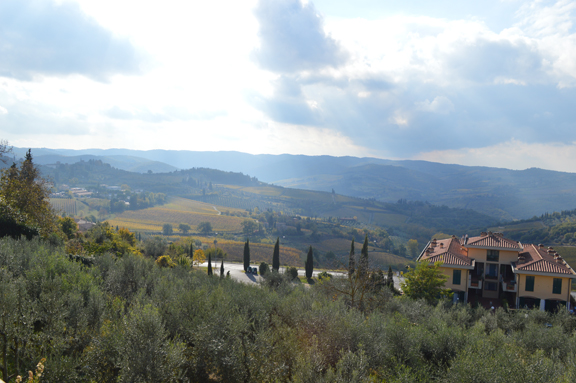
Above: The view from Panzano in Chianti.
I’ve spent the better part of my day reading up on all the literature devoted to the origins of the place name Chianti.
Chianti is what is known in toponomastics (the study of place names) as a choronym (Greek for chorus name), in other words, a place name that refers to a number of different places in the same general area.
In the early twentieth century, two theories as to its origins emerged.
On the one hand, scholars have speculated that it came from the Etruscan clante or clanti (the Etruscans were the ancient people who inhabited Italy before the rise of the Roman Empire).
It means step son, god son, or adoptive son in Etruscan. In turn, it comes from the Etruscan clan which means son.
The other theory, which few take seriously, is that it…
View original post 222 more words
Ulivi: Xylella fastidiosa ma si cura
//
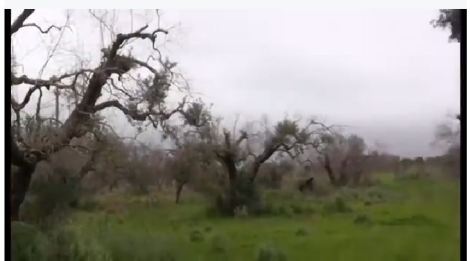
Xylella Fasitdiosa ma si curaGuardate questo video che dimostra che l’essiccamento degli ulivi, qualsiasi sia la causa, si può curareDomani pubblico l’intervista alla giornalista che per prima ha indagato su questa vicenda mettendo in allarme anche l’eurispes e la procura di Lecce
Posted by Sabina Guzzanti on Venerdì 27 marzo 2015
//
Guardate questo video che dimostra che l’essiccamento degli ulivi, qualsiasi sia la causa, si può curareDomani…
Posted by Sabina Guzzanti on Venerdì 27 marzo 2015
 La Casa di San Donato in Perano