Documentary and historical excerpts of the location of San Donato in Perano of which La Casa (The House in Chianti) was part, from the book “San Donato in Perano”, by Francesca Marchetti, Donatella Tognaccini, from the Periodical “Il chianti, Storia, arte, Cultura, Territorio, Periodico del Centro di Studi Storici Chiantigiani”, n. 24
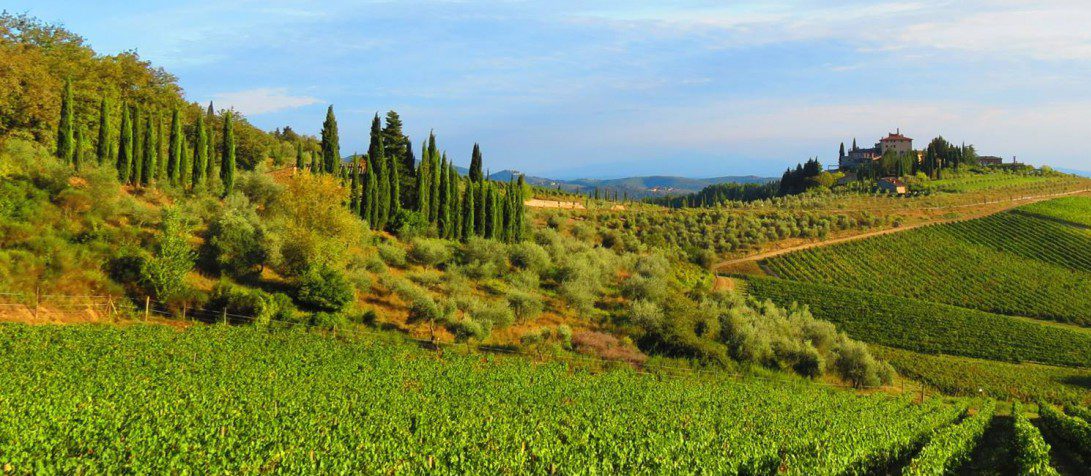
The castle of San Donato in Perano (566 m asl, Municipality of Gaiole in Chianti, Province of Siena) is located in one of the most charming and interesting areas in the entire Chianti region from aa historical-landscape point of viiew. It has a dominant position and was under the control of the ancient “Terzieri” of Gaiole and Radda. From San Donato you can see the fortress of Montegrossi, the medieval village of Vertine, the dense forests that separate the castle from the Badia a Coltibuono and the countless cultivated fields that accompany the morphology of the hills.
Etruscan-Roman period
(..)
The toponym ‘Perano’ that refers to the Etruscan anthroponym Peras (lat. Pera, meaning Pear) is the only element that attests to a continuity of settlement from the Etruscan to the Roman period through the predial suffix – anus.
(…)
Traces of a house at La Casa (640 m above sea level) can be observed in a woodland west of the farm, estate near the Piana torrent (short segments of dry-wall with squared stones for a range of 8*10; brick and ceramic materials).
[Year 1000].
All indications lead us to assume that there has been a settlement in San Donato since the Roman Etruscan period. Around the year 1000, the existence of the Villa in the locality of Gerda probably limited the expansion of the cultivated land held by the curtis of San Donato in Perano, the heir to the ancient and largest Roman estate.
(…) Piero Torriti states that in Perano in the 11th century, in the locality of Perano, the ‘Firidolfi di Montegrossi […] had founded a church today no longer in existence, substituted by the current chapel’ (the head of this family, Geremia dei Firidolfi di Montegrossi, founded the monastery of San Lorenzo a Coltibuono in 770). A parchment, from the period of 770-1095 lists the numerous possessions of the Firidolfi: castella, churches, a chanonica and parish churches. The Chiesa di Sanctro Nicholao in Peramo is also listed as property.
The toponym San Donato in Perano
The toponym San Donato in Perano was mentioned for the first time in November 1112 in a reference to a sale of plots of land in San Donato in Perano to the Badia di Coltibuono by the married couple Anselmo and Parenza.
(…)
The villa and the estates of the Strozzi family (16th century)
On March 21st, 1566, twenty-two years after its first mention, the owner of the villa of San Donato was still Roberto di Michele di Carlo di Piero Strozzi. (….) Besides this [the Villa] Roberto Strozzi owned the following farm estates: Campora, Vinci, Barbischio, Miccine, Tibuca, Belvedere, Spanda, Domine, Montecasi, la Casa, Casuccia
(…)
Orazio Strozzi and other owners of San Donato in Perano (17th century)
On August 3, 1631, Luigi Altoviti and Luigi Serristori appeared as creditors for Roberto di Giovanni Strozzi, while Francesco del Cianni acted as trustee for Carlo di Giovanni Strozzi. The following year the property in their hands was purchased by Orazio.
According to what is stated in the ‘arroto n 79 del Quartiere di Santa Maria Novella’, of 1632, the assets located at San Donato in Perano included:
(…)
(…)
In 1632, according to the record, this property of the above-mentioned farm estates was grouped toghether: ‘They are now reduced to the farm estates described hereunder… A Palace called San Donato in Perano with all its belongings, habitations and servants and attached to the Church of San Donato, which is in the middle of the said Palace with its continuous vegetable garden, with a new cultivated area called Coltino and Vigna vecchia and others’; (…) the farm estate ‘La Casa’ (…)
The property in the 18th century
In the 18th century many significant events took place. From the ‘Dimostrazione delle Spese in Coltivazioni dedotti i patti annui nella Fattoria e Beni di San Donato in Perano in Chianti dai già Illmi Signori Orazio e Marchese Rosso Srozzi dall’anno 1683 all’anno 1742, (list of farming expenses), important information is learned about the property of the Strozzi family in San Donato. We know that during this period a new ‘ice-house’’ was built (payments from 1717 to 1719) and the ‘nuovo Condotto di Civillano’ was built, that is the villa’s aqueduct (payments for the works from 1713 to 1741). The farm estates were the following: Campora, Belvedere, Casina, Selvole, Spanda, Domine, Casa, Podere di Mezzo, Coste, Casuccia, Casino, Cavarchione, Cavarchino, Tibuca, Montecasi, Vinci, Poggione, Barbistio, Frabocchi, Montelucci, Evanella, Miccine, Gaiole.
(…) In 1742 the following property is listed: villa, ‘ragnaia’, olive grove, yard and garden, ice-house; (…) the farm estates: Coste, Casa, Domine, Spanda, Mulino di Selvole, Casanuova, Selvole, Belvedere, Campora di Montecasi, Tibuca, Casuccia, Vinci, Frabecchi, Barbistio, Miccine, Casino di Vertine, Cavarchione, Cavarchino, Montelucci, Campo di Poggio di Vertine, Podere di Gaiole, Evanella, La Fornace, Poggione, Campo del Coltaccio, Campo del Coltino, Woodland knowsn as Pian di Lupino (in join ownerhip).
In 1747, in the Ristretto dell’Inventario dei beni dati in portata in ordine alla Sovrana Legge del 22 giugno 1747 dai Signori Figli Pupilli et Eredi beneficiari del fu Sig Conte Cav Piero Strozzi e spettanti agli appresso fidecommissi (inventory of property), we find a part of the property due to Abbot Paolo’s fidei commissum of the late Senator Orazio Strozzi for the farm of San Donato in Perano. There are the farm estates of (…) These were also parts of the property due to Roberto di Michele di Carlo Strozzi fide-commissum of Roberto di Michele di Carlo Strozzi including “Courtly residence with chapel, garden, oil mill, lawn, dove-cote, ice house and other appurtenances” in San Donato in Perano. Besides the Villa there were also the farm estates at: (…) La Casa.
(…)
On February 6, 1772, in order to decide the hereditary division of property between the Strozzi brothers, several experts were called tin the appraise the property belonging to the farm of San Donato in Perano, as documented in the Divise e Stime della Fatt.ia di San Donato in Perano fatte da Romanelli, Bantis e Caldini l’anno 1772, 6 Febbraio (Division and appraisal of the Farm of San Donato in Perano drawn up by Romanelli, Bantis and Caldini on February 6, 1772).
The following is a list of all the farm estates that made up the farm and includes the number of buildings, the name of the sharecropper and the improvements do be made:
Estate La Casa
Worker Lorenzo Montini
Rooms 8
Attached stables, cellar, dovecote, oven, farm yard, shed, compost heap
Notes The hosue needded tenovations, there was a ragniaia (Snares
or trapping birds) at the gully
[The Barn: il Fico ]
The barn, east of the San Donato Podere La Casa road, overlooks the farmyard with two simple rectangular windows, has a single-pitched roof and consists of an older, typologically 16th-17th-century part (doc. in 1822) that was later enlarged on the north side, post-1870.
The typology of this barn corresponds to those of the first huts made of masonry from the late sixteenth to the early seventeenth century, when the first “worker’s houses” made of durable materials also arose: a single quadrangular room with a wooden roof supporting the roof, often with a single slope. Plan dimensions were always small because the productivity and extent of fodder crops were limited.
The barn west of the San Donato road Podere La Casa existed as early as 1822 but with an almost square shape. It was later extended to a doubling of the area downstream and a parade was built on the farmyard resting on a stone masonry septum and brick pillar. This is the Chiantishire variation on the basic type of the five-seventeenth-century barns: a parade room in front mostly used as a cartway and tool shelter.
Appendix 2
Cantagalli Estimate of the Fattoria di San Donato in Perano (February 7, 1784)
“The estate of San Donato in Perano is situated in Chianti a short distance from the castle of Radda and that of Gaiole. It can be accessed from Siena, Florence and the Ferrovia Aretina via the Chiantigiana Senese, the Chiantigiana Fiorentina and the provincial road from Montevarchi to Gaiole. The interior of the estate, however, is not provided with convenient secondary accesses, nor is the Farm House central enough to the lands, which are very scattered, and often discontinuous among themselves, so that an effective Agency and Guardiagione cannot be exercised without considerable personnel and proportionate expenses.”
It consists of the following parts:
(…)
Estate of La Casa:
The quantities of trees are given, broken down by age and type:
Age Vines Olives Fruit Mulberries Trees
Old 94885 762 0 0 0
Adults 84999 2500 0 154 52
Young 34105 1000 1308 242 400
Appendix 2
Cantagalli Estimate of the Fattoria di San Donato in Perano (February 7, 1784)
“The estate of San Donato in Perano is situated in Chianti a short distance from the castle of Radda and that of Gaiole. It can be accessed from Siena, Florence and the Ferrovia Aretina via the Chiantigiana Senese, the Chiantigiana Fiorentina and the provincial road from Montevarchi to Gaiole. The interior of the estate, however, is not provided with convenient secondary accesses, nor is the Farm House central enough to the lands, which are very scattered, and often discontinuous among themselves, so that an effective Guardianship and Agency cannot be exercised without considerable personnel and proportionate expenses.”
It consists of the following parts:
(…)
Of an estate of the House
The quantities of trees are given, broken down by age and type
Age Vines Olives Fruit Mulberries Trees
Old 94885 762 0 0 0
Adults 84999 2500 0 154 52
Young 34105 1000 1308 242 400
And animals raised, distinguished by farm:
FARM ESTATE SHEEP CATTLE PIGS HEIFERS COWS CALVES BURROS
LA CASA 2 9 2 8
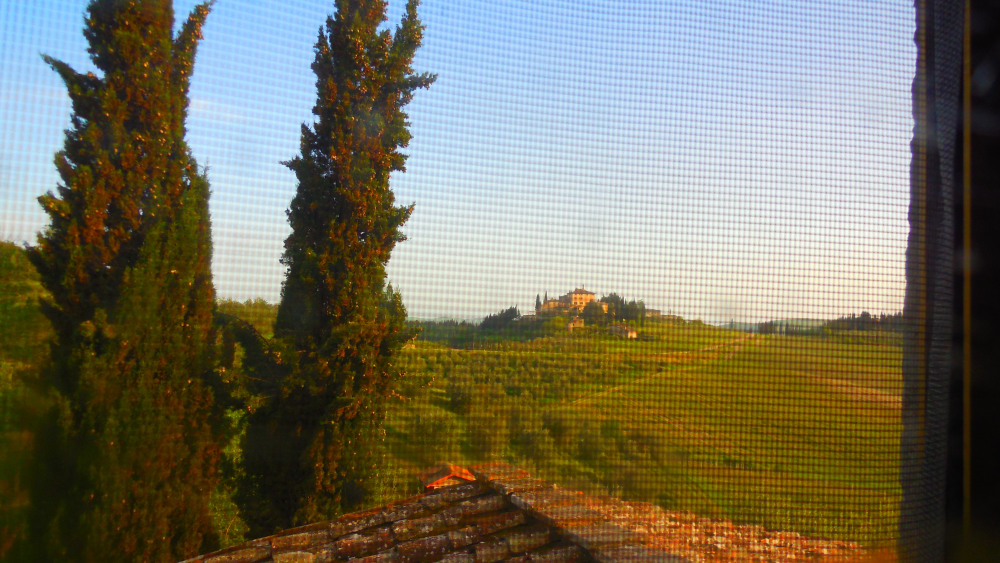
 La Casa di San Donato in Perano